It started the way it does in most families: someone becomes the tech support.
Prefer to talk? Call (832) 952-7770 — a real person answers. no phone trees, no hold music.
Our story
I am Yusef. I am a software engineer, and for most of my adult life I have also been the person my family calls about technology. The printer that stopped working. The iPad that filled up. The email that would not send. The password that worked last week and does not work now.
I never minded. What I did notice, slowly, was how much of it had nothing to do with technology. The relatives calling me were capable, intelligent people — people who had run households and businesses and raised families. But the devices in their hands had been designed by people who never pictured them, and every year the design got a little more confident that everybody already knew how it worked.
The part that stayed with me was the apologising. “I hate to bother you with this again.” People I loved felt embarrassed asking for help with a device that was genuinely confusing. That is backwards. They were not failing at technology. Technology was failing them, and then charging them for the privilege.
Then someone in my family got scammed
A fake apartment listing. It looked completely legitimate — photographs, an address, a plausible price, a landlord who answered messages promptly and had a reasonable-sounding explanation for everything. Money changed hands for an apartment that was never available, because it was never real.
What struck me was not that someone had been careless. Nobody had been careless. The listing was good. The story held up. Anyone moving quickly and hoping for good news would have believed it, and plenty of people half their age have fallen for worse.
The scam did not succeed because of a lack of intelligence. It succeeded because there was nobody to ask before the money moved.
That is the gap Tech Peace fills. Not a repair counter, and not a lecture about how you should have known better. Just a trustworthy person you can reach before you click, send, pay, or reply — who knows your setup, remembers your last problem, and will never make you feel small for asking.
Why it is built this way
Because I write software for a living, I could not ignore an uncomfortable fact: a company serving older adults gets handed extraordinary access. Email, banking, photos, medical portals, the whole digital life. Built carelessly, a company like this becomes precisely the threat it claims to protect people from.
So the rules came first, before the marketing. We never ask for a password. We never move anyone's money. Every technician is background-checked and identifiable. We take the least access needed and write down what we did. Those are not features we added — they are the reason the company is worth starting.
If you are looking after a parent from another city, or you are tired of feeling like a burden to your own children, that is exactly who this was built for. Call us and tell us what is going on. The first conversation is free, and we will tell you honestly if you do not need us.
— Yusef, Founder, Tech Peace
Four rules we will not trade away
These are not posters on a wall. Each one costs us something, which is how you know they are real.
Patience is the service
Anyone can fix a printer. Sitting with someone while they learn to do it themselves, without making them feel foolish, is the actual skill — and it is what we hire for.
Never know more than we need
We do not collect passwords, we do not keep access we are not using, and we do not read anybody's email. Least access, always. It protects our clients and it protects us.
Independence over dependence
A business model built on keeping people helpless would be a bad business and a worse thing to do. We measure ourselves on how much more capable you feel afterwards.
No selling through fear
The threats are real, and we will tell you the truth about them. What we will not do is frighten you into buying something. If you do not need us, we will say so.
Trust is the product, so we put the rules in writing
Inviting someone into your digital life is a serious thing. These are the standards we hold ourselves to — and they are also how you can tell a real Tech Peace technician from someone impersonating one.
We will never
- Ask you to tell us a password
- Ask you to transfer money, ever
- Ask for gift cards or cryptocurrency
- Ask for access to your financial accounts unless you need help and are present
- Make a purchase without your explicit say-so
- Install monitoring software without your consent
- Pressure you into buying something
- Use scare tactics to sell you security
If someone does any of the above and claims to be from Tech Peace, they are not. Hang up and call our main number yourself.
Every Tech Peace technician
- Passes a background check before their first visit
- Shows verifiable company identification
- Follows a documented, written security procedure
- Uses audited remote-access software only
- Asks permission before touching any device
- Records what was done in every session, in plain English
- Takes the least access needed to solve the problem
On passwords: we help you manage your credentials without ever knowing them. You type them; we look away. If you want a password manager, you hold the master password — not us.
Most tech support fixes devices. We look after people.
There is nothing wrong with a repair counter — sometimes a repair is exactly what you need. But a repair does not stop the next suspicious email, and it does not sit on hold with the cable company for you.
| Aspect | Typical tech support | Tech Peace |
|---|---|---|
| The first question asked | What is wrong with the device? | What are you trying to accomplish? |
| What gets fixed | The machine in front of them | The machine, the accounts, and the situation |
| Who you speak to | Whoever is next in the queue | People who know your setup and remember you |
| Scope of help | Hardware and software | Devices, accounts, scams, appointments, phone calls on your behalf |
| When something looks suspicious | Not really their department | Send it to us — safe, suspicious, or scam |
| The relationship | One transaction at a time | Ongoing, with a written record of everything done |
| Who it is designed for | The general public | Older adults and their families, specifically |
Older adults, their families, and the organisations that serve them
Different people, one aim: technology that works, and nobody left to figure it out alone.

Older adults
Someone patient to call, and a second opinion on anything that looks suspicious.
Learn more
Families & caregivers
Relief from being the household help desk, and a straight answer about whether Mom is okay.
Learn more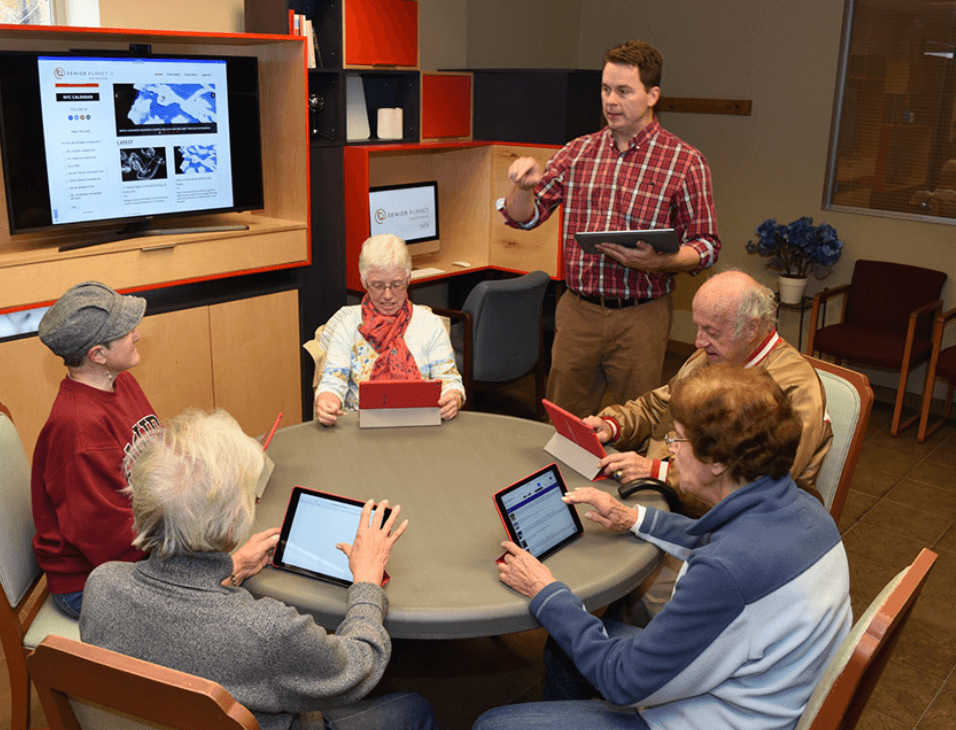
Organisations
A technology programme for residents, clients, and members that your staff do not have to run.
Learn moreTell us what is going on
No sales script, no jargon, and no obligation. Call (832) 952-7770 or leave your details and a real person will call you back.
Would rather just talk? Call (832) 952-7770. A real person answers. No phone trees, no hold music.
Monday–Saturday, 8am–8pm (your local time)
Not ready to talk? Find out where you stand first.